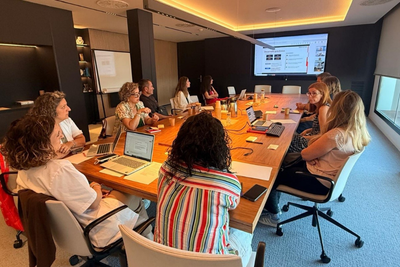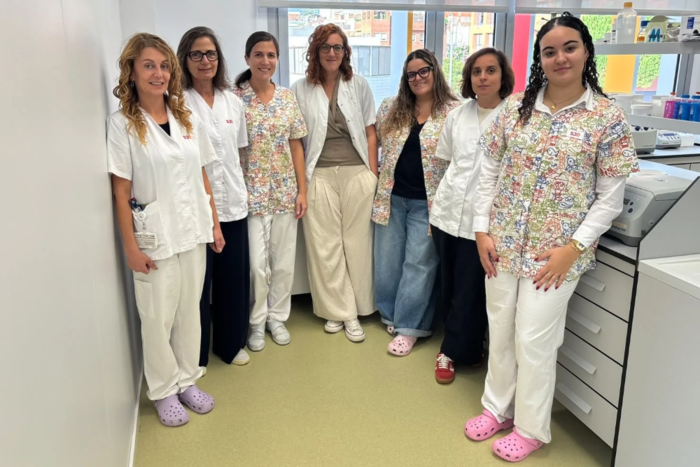
The SEHOP-PENCIL project promotes precision medicine for all children and adolescents with cancer through a pioneering national network
A new publication describes the creation of this initiative, which has facilitated access to genomic studies for more than 900 paediatric patients with cancer from across Spain.
-
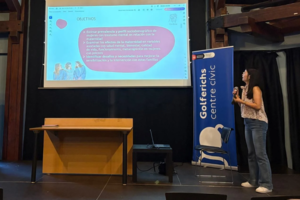
We participate in la Nit de la Recerca with a talk on co-creation in mental health and motherhood
IRSJD researcher Lin Chen is participating in la Nit de la Recerca 2026 alongside the team of co-creators represented by Yolanda Jerez and Carmen Prieto, giving a talk on the Co-Elna project-an initiative led by Susana Ochoa and Victoria Espinosa that promotes co-creation in research and care regarding mental health and motherhood in collaboration with Bàrbara Mitats from Salut Mental Catalunya.
-
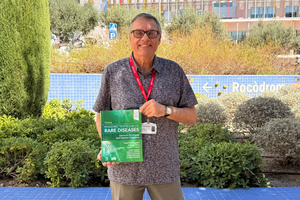
Dr Francesc Palau leads the edition of the new Nelson Pediatric Textbook of Rare Diseases, an international reference work
The head of the Neurogenètica i Medicina Molecular group at the IRSJD is co-editor of the Nelson Pediatric Textbook of Rare Diseases, a new international reference work that brings together the latest advances in genomics, genetic diagnosis and clinical management of paediatric rare diseases.
-
Sant Joan de Déu leads a European consortium to test a pioneering immunotherapy strategy for the most aggressive and deadly pediatric brain tumor
EPICA - DIPG, a European consortium led by SJD Barcelona Children’s Hospital, launches a five-year project to test an innovative immunotherapy for Diffuse Intrinsic Brainstem Glioma.

-
A study shows that ACT therapy before surgery improves the recovery of patients with low back pain
A study published in the European Journal of Pain concludes that incorporating a psychological intervention based on Acceptance and Commitment Therapy (ACT) before lumbar surgery can significantly improve patient recovery.
-
We identify a new cellular mechanism involved in Charcot-Marie-Tooth disease
The results better explain why the mutation of this gene causes the progressive degeneration of peripheral nerves.
-
A study led by Sant Joan de Déu shows the benefits of the Unified Protocol in young people at high risk of psychosis
A study led by a research team at Sant Joan de Déu concludes that a psychological intervention based on the Unified Protocol may help reduce attenuated psychotic symptoms and improve certain cognitive processes in young people at ultra-high risk of psychosis.
-
Which genes make people more susceptible to depression and other psychiatric disorders?
A study by the University of Barcelona has identified nearly 20 genes that could contribute to some people being more susceptible to depression, anxiety and traits such as irritability and neuroticism.
-
Families contribute to the development of the Advanced Therapies Program at Sant Joan de Déu.
A group of patients' parents has reviewed and provided recommendations for the Advanced Therapies Program at Sant Joan de Déu Hospital, reinforcing the institution's commitment to people-centered research and innovation.