
OPERA launches on World Children’s Day to advance more inclusive and paediatric patient-centered clinical research
On World Children's Day, the Patient Engagement in Research Area at Sant Joan de Déu Research Institute announces the launch of OPERA: Observatory for Patient Engagement, Research and Advocacy, a new initiative designed to develop research that can improve the design of paediatric clinical trials and, generate evidence on the value and impact of involving patients and facilitating their access to clinical research.
The choice of the 20th November for the launch reflects one of OPERA's fundamental principles: children, young people and families should not only participate in research, but should have an active voice in shaping the research that affects their lives.

At a time when major advances are transforming paediatric medicine, access to clinical research remains challenging for many children and families. These barriers are particularly significant in rare and ultra-rare diseases, where small patient populations and the concentration of expertise in a limited number of specialised centres can make participation in research especially difficult. At the same time, clinical research does not always adequately incorporate the perspectives of patients and families or measure the wider value of improving access and participation.
OPERA has been established to help address this gap. Its ambition is to contribute to a clinical research ecosystem in which patient experience, access and engagement are recognised as measurable contributors to research quality, efficiency, equity and value.
The Observatory will bring together in the different annual research projects patients, and families alongside patient organisations, researchers, healthcare professionals, clinical research sites, health economists, academia, pharmaceutical and biotechnology companies, clinical research networks, regulators and policymakers.
The first OPERA flagship project
OPERA will begin its work by investigating the value of patient-centred decentralised paediatric clinical trials.
Building on real-world evidence generated at Sant Joan de Déu Barcelona Children's Hospital, the project will examine the feasibility, acceptability, implementation and value of decentralised approaches, incorporating perspectives from children and families, healthcare professionals, research sites and industry.
The objective is to understand which strategies genuinely reduce the burden of trial participation and improve access without compromising research quality or operational feasibility. Importantly, the study will also investigate the potential technological and organisational burdens that digital solutions themselves may create.
The results of this project will be presented in a webinar on the 26th of January at 4 pm CET.
A second OPERA project will investigate whether the additional costs of cross-border recruitment in paediatric trials can be offset by shorter recruitment timelines. Using data from approximately 30 interventional paediatric trials conducted at Sant Joan de Déu Barcelona Children's Hospital over the last decade, it will examine recruitment performance, timelines, quality indicators and the additional costs associated with international patient participation.
Building an international collaborative observatory
OPERA is conceived as an international and collaborative initiative. The ambition is to enable research centres, patient organisations, academic groups and other stakeholders to contribute data, expertise and new research questions, progressively building a shared evidence base for more inclusive and efficient clinical research.
The Observatory also embraces an open-knowledge approach: reports generated through OPERA studies are intended to be published in an open format so that patients, researchers, research sites, industry, policymakers and other stakeholders can benefit from the knowledge generated.
Research with children, not only for children
Launching OPERA on World Children's Day represents a commitment to a simple but important principle: research intended to improve the health of children should be shaped with children and families, not only conducted for them.
By generating measurable evidence on patient involvement, access, equity and innovation, OPERA aims to help transform patient-centred research from an aspiration into an evidence-based component of high-quality clinical research.
Because listening to children is important. Demonstrating how their involvement can change research is the next step.
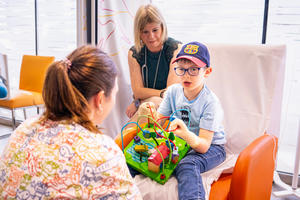
OPERA will begin its work by investigating the value of patient-centred decentralised paediatric clinical trials.
