
A study shows that ACT therapy before surgery improves the recovery of patients with low back pain
A randomized controlled clinical trial led by researchers from Hospital del Mar, in collaboration with the Universitat Autònoma de Barcelona, the Universitat Rovira i Virgili, and the Parc Sanitari Sant Joan de Déu, has shown that Acceptance and Commitment Therapy (ACT) delivered before lumbar surgery can significantly improve patient recovery and reduce the impact of pain on daily life. The study, Effectiveness of Acceptance and Commitment Therapy (ACT) for the Management of Postsurgical Pain: A Randomized Controlled Trial (SPINE-ACT Study), was published in the European Journal of Pain and constitutes a key part of the doctoral thesis of psychiatrist Juan Ramón Castaño, supervised by Dr Antonio Montes, Dr Victor Pérez, and Dr Juan Vicente Luciano.
The research, known as the SPINE-ACT study, included 91 patients with degenerative lumbar disease who were candidates for surgery. Participants were randomly assigned either to receive an online group ACT programme before surgery or to receive usual care. The analyses focused on the 54 patients who ultimately underwent surgery.
Acceptance and Commitment Therapy (ACT)
Acceptance and Commitment Therapy (ACT) is a third-wave psychological intervention designed to help people live more adaptively with pain, difficult emotions, or negative thoughts, rather than attempting to eliminate or avoid them. Through strategies such as acceptance, mindfulness, and the identification of personal values, ACT aims to increase psychological flexibility-that is, the ability to remain committed to meaningful activities despite the presence of pain or distress. In the field of chronic pain, this therapy has been shown to reduce the impact of pain on daily life, improve emotional well-being, and promote functional recovery, even when pain intensity does not necessarily decrease.
Promising results
The findings show that patients who received the psychological intervention experienced a significant reduction in pain interference with daily activities, one of the main indicators of recovery. In addition, improvements were observed in symptoms of anxiety and depression, pain catastrophizing, fear of movement, disability related to low back pain, as well as increased psychological flexibility and pain acceptance. These improvements were maintained for up to twelve months after surgery.
By contrast, the study found no significant differences between the two groups regarding pain intensity, reinforcing the idea that psychological interventions primarily help improve the way patients live with pain and regain their functional abilities.
Juan Vicente Luciano, head of the interinstitutional research group Psychological Research in Fibromyalgia and Chronic Pain (ÀGORA Group) at theInstitut de Recerca Sant Joan de Déu (IRSJD), senior researcher at the Parc Sanitari Sant Joan de Déu (PSSJD), associate professor at the Universitat Autònoma de Barcelona (UAB), and one of the study's authors, highlights: "For many years, it has been assumed that the success of surgery depended almost exclusively on the surgical technique. Our study shows that preparing patients from a psychological perspective can also have a highly significant impact on their recovery and their quality of life after surgery."
The authors conclude that these findings reinforce the need to incorporate ACT-based psychological interventions into the standard care pathway for patients undergoing lumbar surgery, with the aim of improving functional recovery and quality of life following the operation.
The full publication is available in the European Journal of Pain.
DOI: 10.1002/ejp.70293
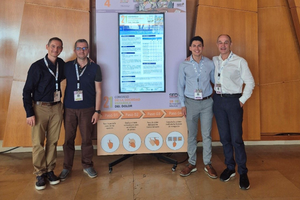
The findings show that patients who received the psychological intervention experienced a significant reduction in pain interference with daily activities.
