
Functional Genomics Platform
Introduction
The SJD Functional Genomics Platform (PGF-SJD) studies patients' genomic variants to understand their biological significance and help determine their relationship to the disease. It analyzes dynamic aspects of the cellular phenotype, such as the functions and interactions between genes and proteins.
The platform supports the medical team in making decisions based on inconclusive genetic test results.
Over the past seven years, 290 patients have been evaluated, and a diagnosis has been established in 70% of cases.
The platform is comprised of researchers and doctors with extensive experience in genetics and molecular medicine.
Services and Applications
The services are structured into two units:
- The Precision Diagnostics Unit (PDU) for the functional validation of candidate genetic variants. This unit performs in silico analysis, experimental approaches to functional genomics, and multidisciplinary case discussions to inform diagnostic decisions.
- The Personalized Therapy Unit (PTU) supports exceptional treatments and preclinical and clinical trials by investigating molecular targets in drug repositioning studies and the development of new therapeutic molecules.
At the end of the study, a report is issued with detailed results, the biological report, and a joint decision-making process with the medical team.
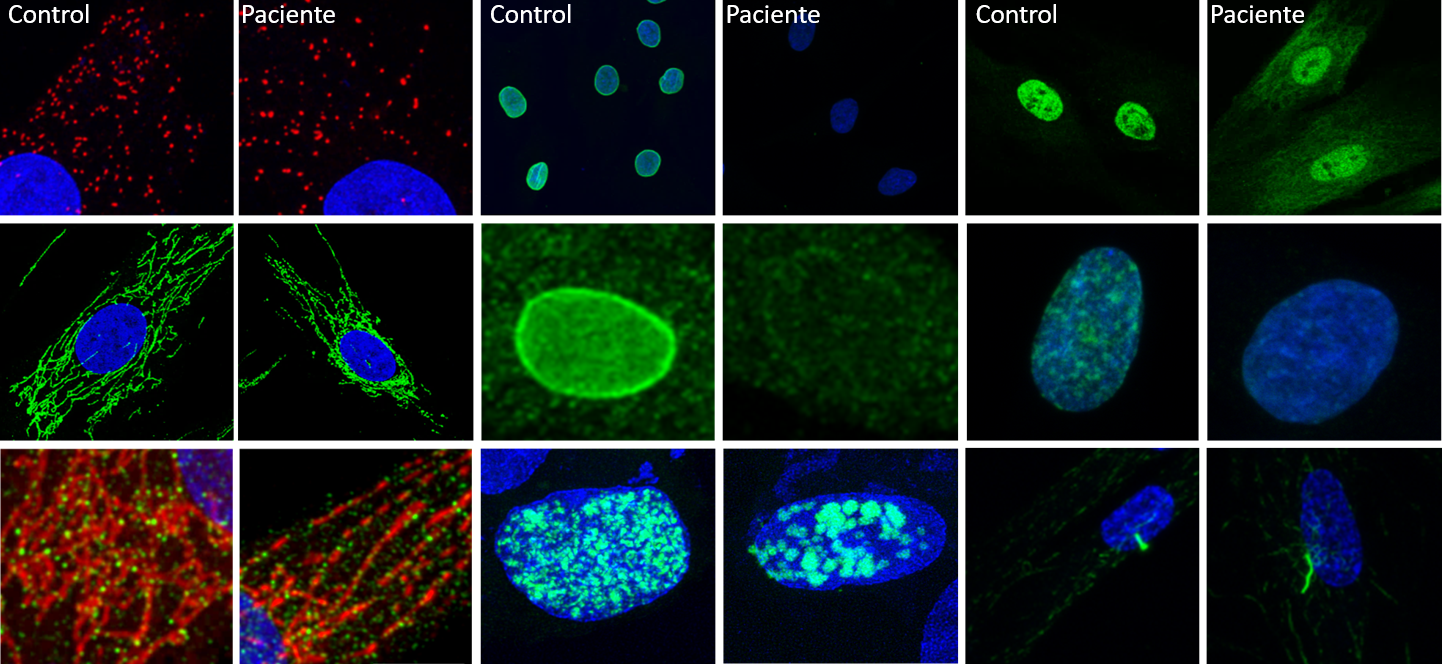
Functional genomics tests are performed either in silico, in vitro, or using both approaches to determine the biological and pathological impact of genetic variants. The methods include genetic, molecular, and cellular analyses, such as quantitative PCR techniques, gene cloning and expression, DNA or cDNA sequencing, subcellular protein localization, protein interaction studies, cell image analysis using confocal microscopy, etc.
The following documents contain additional information for the medical team, as well as a summary diagram of all services:
Laboratory equipment
- QX200 Droplet Digital™ PCR (Bio-Rad)
- QuantStudio™ 6 Flex (Applied Biosystems)
- GloMax® Navigator System (Promega)
- NovoCyte Flow Cytometer (ACEA Biosciences)
- Pulse 650 UltraSonic Homogenizer (Benchmark Scientific)
- iBright™ 1500 (Invitrogen)
- Ultracentrifuge CP80NX (Hitachi)
- Confocal Microscope Leica TCS SP8 (Leica Microsystems)
Experience and Results
Since the platform became operational in 2019, a total of 290 patients have been analyzed. Of these, 227 cases were evaluated within the Diagnostic Pathology Unit (DPU) for diagnostic purposes, and 63 patients were evaluated within the Treatment Pathology Unit (TPU) for therapeutic purposes. Cases from the DPU were included in the program if they met any of the nine inclusion criteria indicated in the Procedure section.
- The main inclusion criteria were:
- The patient carried a variant of uncertain clinical significance (criterion 1).
- Incongruence between the patient's phenotype and genotype (criterion 2).
- The need for diagnostic testing using omics (criterion 8).
The confirmatory studies of the pathogenicity of the variant(s) or the establishment of a causal relationship between the phenotype and incongruent genotypes (Biological Diagnostic Rate) was 70.73%. Specifically, of the 227 cases evaluated within the UDP, a significant impact on the biology of the gene variant or gene product (RNA or protein) was found in 145 cases. Of these 145 cases, an etiological diagnosis was achieved in 133 cases (6 variants would require an experimental approach and the other 6 were new genes without an associated nosological entity in OMIM).
Examples of studies
Below are examples of reports issued by the platform.
Publications
Other activities
ClinVar from the SJD Functional Genomics Platform
Fees
View fees
Contact
To contact the platform, please send an email to genomicafuncionalSJD(ELIMINAR)@sjd.es
To request a service from HSJD internal staff, please follow the instructions in the attached document.
