
An international study led by Sant Joan de Déu confirms that GNAO1-RD disease is not degenerative
An international study led by researchers from the Rehabilitation and Physical Medicine Service of SJD Barcelona Children's Hospital and researchers from the Epilèpsia i trastorns del moviment en Pediatria research group of the Institut de Recerca Sant Joan de Déu has described for the first time the long-term clinical evolution of disorders related to the GNAO1 gene.
GNAO1-RD
GNAO1-RD (GNAO1-related disorders) is a rare neurological disease of genetic origin that mainly affects children from the first months of life. It is caused by alterations in the GNAO1 gene, which plays a key role in communication between brain neurons.
This gene is essential for regulating neuronal signals related to movement, brain electrical activity and neurological development. When its function is altered, the nervous system cannot correctly transmit these signals, giving rise to a wide variety of symptoms such as epilepsy, severe movement disorders and developmental disability.
Research shows that the disease is not neurodegenerative
The study Longitudinal phenotypic trajectories in GNAO1-related disorders: defining disease progression and clinical profiles published in the journal ResearchGate, which analyzes data from 63 patients worldwide, includes the largest longitudinal follow-up carried out to date in this pathology and makes it possible to better understand how symptoms evolve over time. The results indicate that, in general, GNAO1-RD does not follow a neurodegenerative course, with overall stability in disease severity.
However, the research highlights clear differences depending on initial severity. Patients with mild forms show progressive improvements in adaptive skills, communication and activities of daily living, while more severe cases accumulate disability mainly due to the worsening of movement disorders, such as dystonia or dyskinetic crises, which are a type of epileptic seizures or neurological alterations characterized by causing abnormal, involuntary and uncoordinated movements of the body, known as dyskinesias. These movements may affect the face, hands, arms, legs or the whole body, and are usually slow, twisting or contorted, and have no voluntary purpose.
"This study allows us to provide much more precise information to families about the prognosis of the disease and to better adapt the clinical follow-up of each patient," highlights Juan Darío Ortigoza-Escobar, researcher of the Epilèpsia i trastorns del moviment en Pediatria research group at IRSJD and corresponding author of the study.
A key tool for prognosis and care planning
The research uses a specific GNAO1 severity scale, previously developed by the same group, which integrates epilepsy, movement disorders, motor development, language and feeding. This tool allows patients to be stratified according to risk and better anticipate clinical evolution.
In addition, the study reinforces the relationship between certain genetic variants and disease severity, combining clinical data with molecular functional studies. This approach opens the door to more personalized treatments and the design of future clinical trials.
Clinical impact and future research
The results have a direct impact on clinical practice, as they help to better plan care, follow-up and guidance for families, especially in an ultra-rare disease with high clinical variability. The study also underlines the importance of early detection of patients at risk of severe forms, especially to prevent complications associated with dyskinetic crises.
The work has been possible thanks to very extensive international collaboration, with the participation of centers from Europe, America, Asia and the Middle East, and consolidates Sant Joan de Déu as a reference center in research in pediatric neurology and rare diseases.
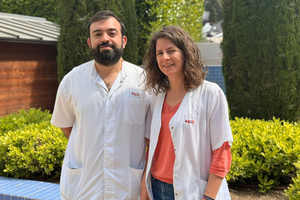
The results have a direct impact on clinical practice, as they help to better plan care, follow-up and guidance for families.
